

Previously unknown musical pieces by Johann Sebastian Bach have been presented and executed in Germany for the first time in 320 years.
Germany's Cultural Affairs Minister the cultural official described the discovery of the two pieces a "significant occasion for the world of music".
They originally drew interest of a musical scholar in the early nineties when he was cataloguing the composer's papers at the Belgian royal collection.
The organ pieces - the Chaconne in D minor and G minor Chaconne - were undated and anonymous. The scholar spent the next 30 years working to authenticate the authorship of the pieces.
Landmark Presentation
They were presented at the historic Leipzig church in the German city, where Bach is buried and where he was employed as a music director for twenty-seven years.
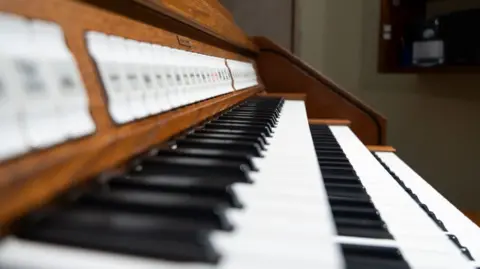
The pair of works were performed by Dutch organist the renowned organist, who said he was privileged to be able to play them for the premiere in over three centuries.
He said the works were "remarkably sophisticated" and would be "a valuable resource for modern musicians, as they are also suitable for smaller organs".
Musical Importance
They are believed to have been composed at the beginning of Bach's professional life, when he was employed as an organ instructor in the community of the German town in Thuringia.
Mr Wollny, who is now the leader of the Bach Archive in Leipzig, said they exhibited several characteristics unique to the musical genius.
"Stylistically, the works also feature aspects that can be observed in Bach's works from this period, but not in those of any other composer," he said.
They are considered to have been written down in 1705 by Bach's apprentice, the historical figure.
At a unveiling of the pieces, the expert said he was "almost completely confident that Bach had created the pair of works" and they have now been included into the official catalogue of his works.
- Europe
- Germany
- Classical compositions
- Performance Arts


